10 WhatsApp scams that you might not know about
23 Apr 2024
Depending on where you are reading this from, chances are, you probably know someone who is on WhatsApp.
Founded in 2009, WhatsApp has quickly become one of the most-used mobile messenger applications, with more than 3 billion users worldwide!
Cybercriminals take advantage of this fact and target masses using social engineering methods to phish them of their sensitive personal and financial information.
Since there is a quick rise in the scams associated with WhatsApp, it becomes essential to be aware of such scams to avoid becoming a victim. Let us explore these scams with some security tips that can help you stay safe.
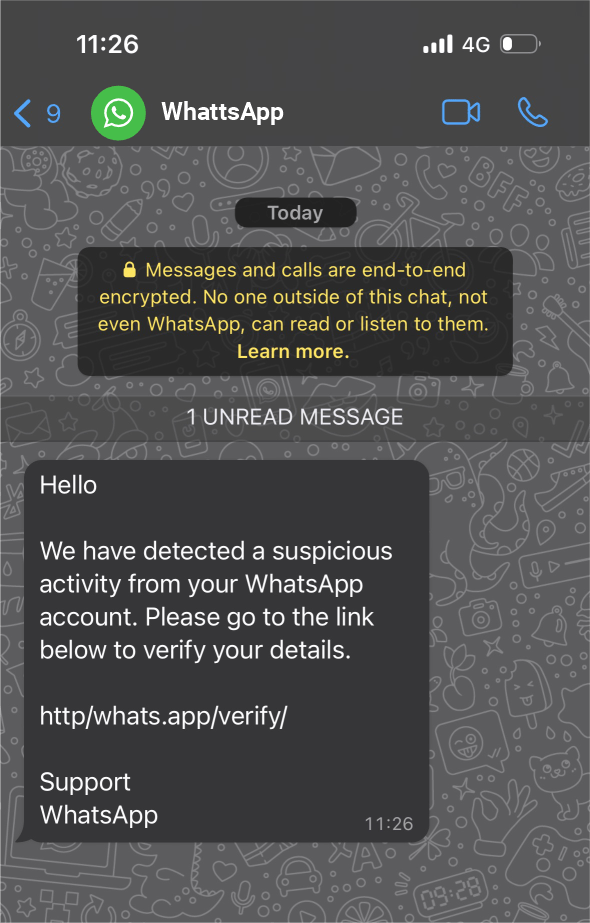
1. WhatsApp Tech Support scam
Cybercriminals pretend to be from WhatsApp Technical support and ask their victims to verify their personal information. They leverage the information provided by their victims to engage in tailored phishing campaigns.
Scammers may also send a link that may install malware to spy on their victim’s personal information like banking details. Prevent giving personal information and block such ‘representatives’ since WhatsApp doesn’t reach out to their users unless they are contacted first.
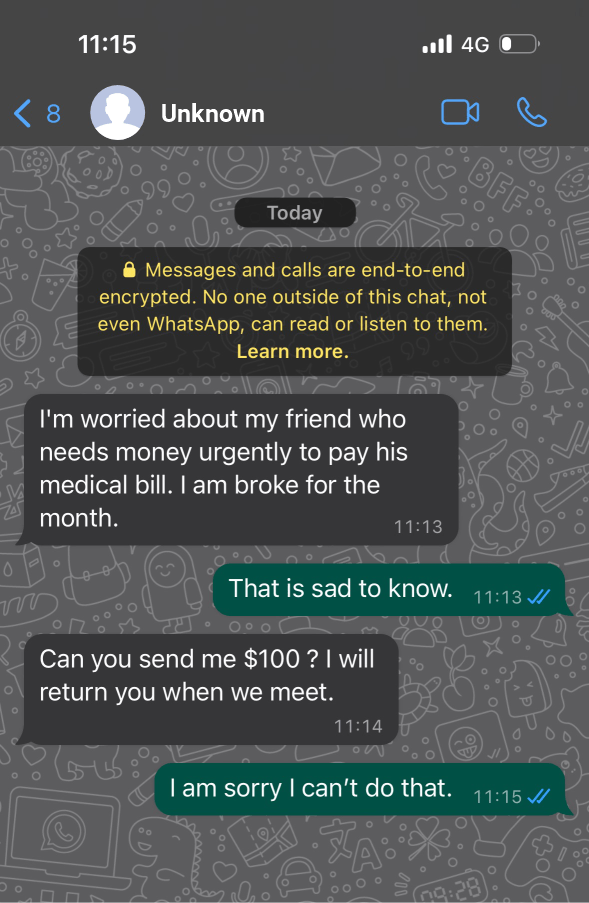
2. WhatsApp money scam
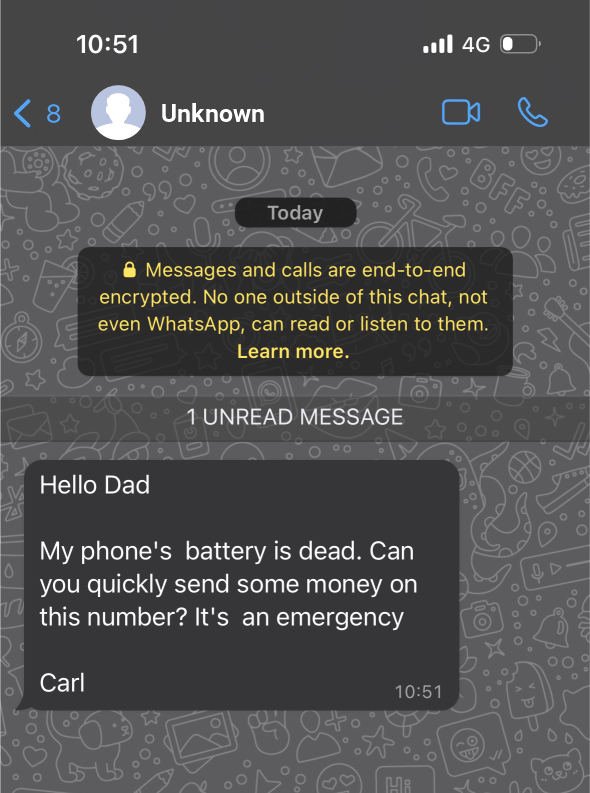
Scammers pretend to be a family member of the victim with a new number and use social engineering methods to bait victims into making a financial transaction. They use a sense of urgency to make their campaigns more effective often asking the victim to transfer them money.
If you encounter such a message verify the number and identity of the person asking them questions that only family members would know the answers to.
3. WhatsApp Charity scam
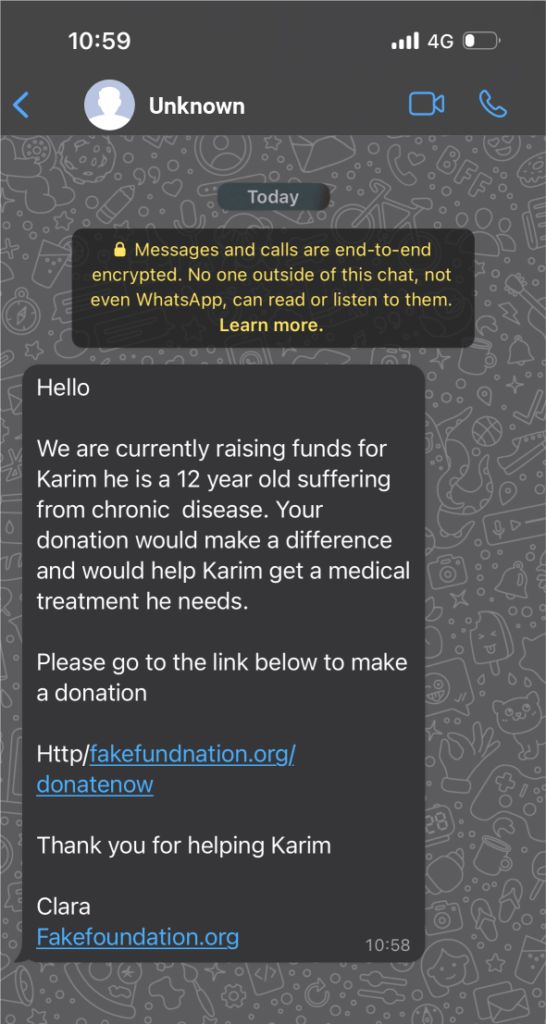
It is highly unlikely that a reputed charity organization would randomly approach you for donations. Scammers message victims to exploit their goodwill by giving away their personal information and engaging in a transaction. Prevent such requests and avoid clicking on any links that aren’t verified or trusted.
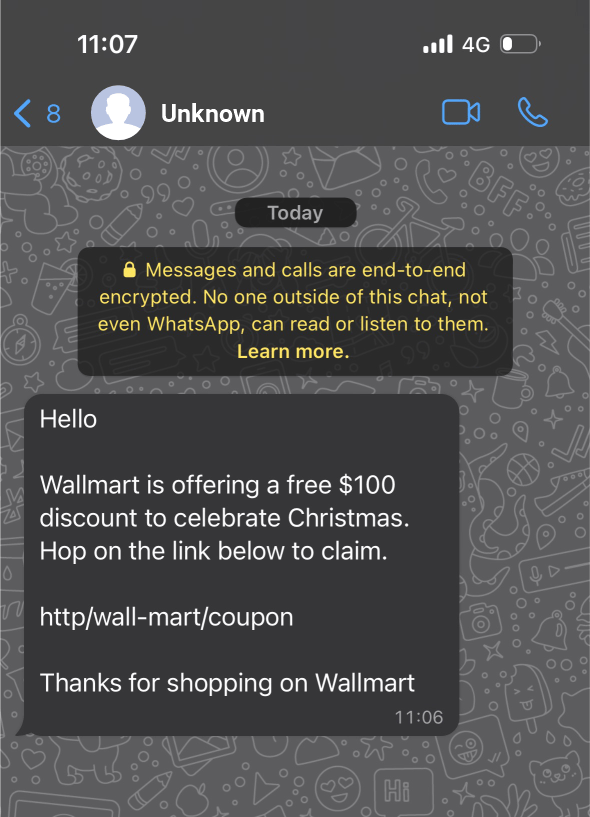
4. WhatsApp Coupons/Discounts scam
Cybercriminals message their targets, baiting them with attractive discounts, coupons, and deals from renowned online shopping websites asking them to click on a link that might lead them to a malicious website made to extract sensitive information or deliver malware that snoops information.
Always prevent clicking on such links and immediately block messages from unsolicited numbers.
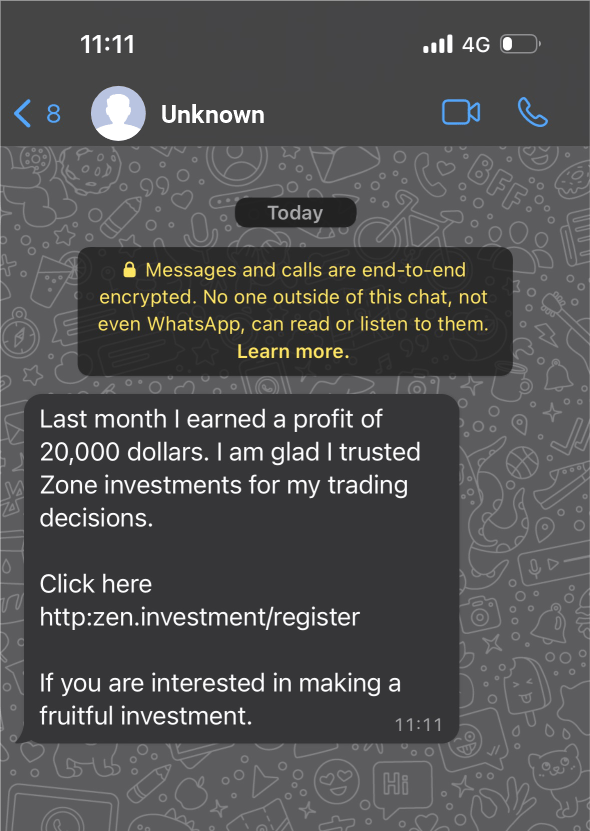
5. WhatsApp Cryptocurrency and Stock trading scam
Cybercriminals pose as lucrative investment company asking their targets to invest a sum in cryptocurrency or stocks by engaging in a financial transaction, baiting them with high returns. They might ask them to install an application for learning tips and tricks for stock/cryptocurrency trading which might be malware designed to extract sensitive information from their device.
6. WhatsApp Romance Scams
Scammers use sophisticated social engineering methods, leveraging a fake identity to build online relationships with their targets. They establish trust by interacting with their victim over WhatsApp for weeks and months to extract more personal information and make them engage in financial transactions. It is essential to be careful with people whom you interact with online. Scammers are known to use fake images with little activity on their profiles. Be aware of an online romantic interest who keeps refusing to meet in person or avoids revealing their face in a video call.
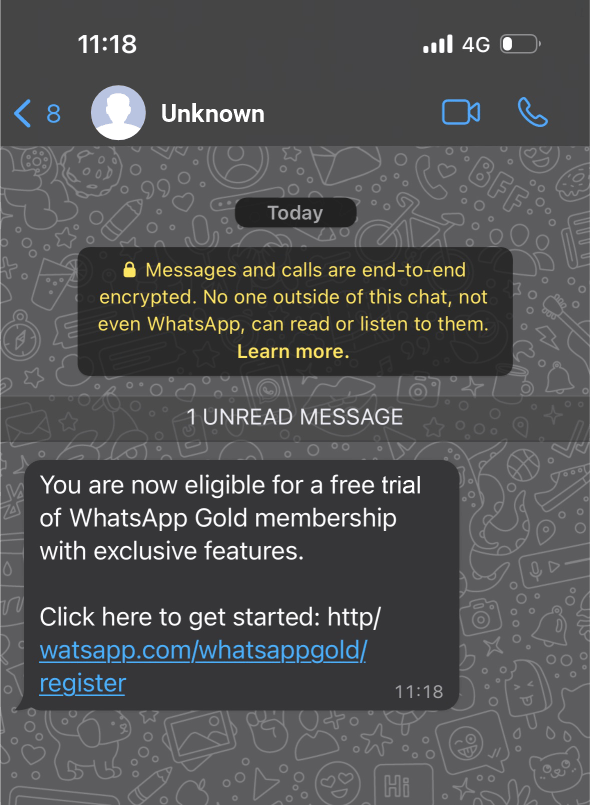
7. WhatsApp Premium/WhatsApp Gold Scam
There is no such thing as WhatsApp Premium or WhatsApp Gold. Scammers deliver malware to their victims by sending them a text about a premium version of WhatsApp with exclusive features asking the victims to click on a malicious link which gives scammers access to their personal data.
8.WhatsApp Call forwarding and number scam
In this, a scammer calls their victim on WhatsApp, asking them to call a number that enables call forwarding to a number that is in control of the scammer. By doing so, they can forward OTPs to their number and take over accounts. If you encounter such a call, it is essential to block the number and change the security code of your WhatsApp account.
9. WhatsApp Quishing or QR code-based scam
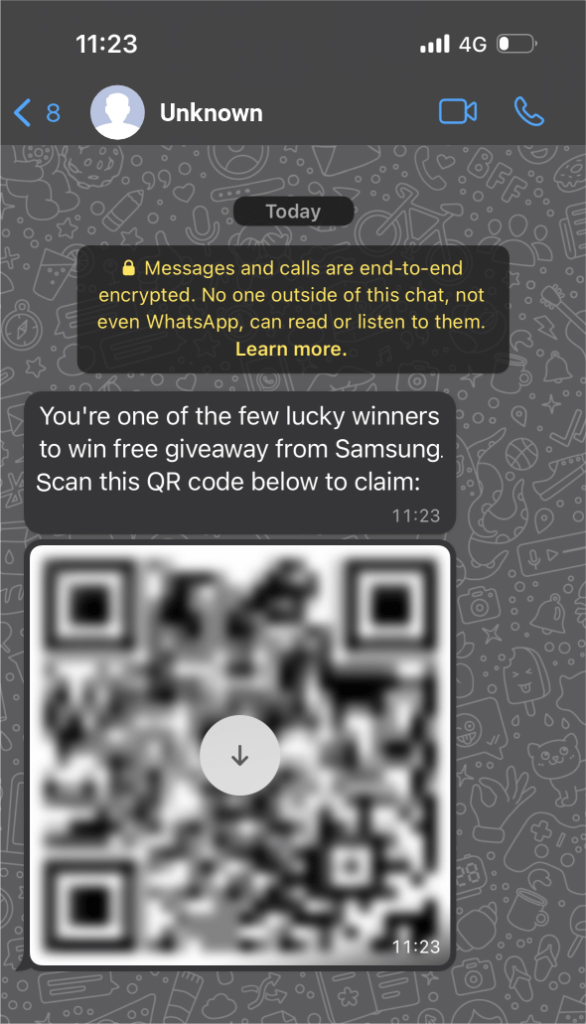
If you get a message on WhatsApp asking you to scan a QR code to verify your account or to win a prize, don’t scan the code. Scammers use malicious QR codes to gain access to your personal information or financial information.
10. WhatsApp Lottery and Free giveaway scam
Scammers message their victims saying that they have won a gift or a lottery and to verify their details by clicking on a link. When their victims click on the link their system is delivered with malware that can log keystrokes giving them access to sensitive financial information.
Learn about the early signs of cyber attack
First steps to take if you are scammed on WhatsApp
Here is what you can do if you are scammed on WhatsApp:
- Stop further interaction and block the scammer
- Report the incident to WhatsApp, your organization’s security team, law enforcement and other relevant parties
- Block your card and change the credentials of your banking account in case of an unauthorized transaction
- Spread awareness among family, friends and colleagues