CVE-2026-102255 – A critical vulnerability affecting SonicWall’s SMA 1000 appliances
08 Oct 2026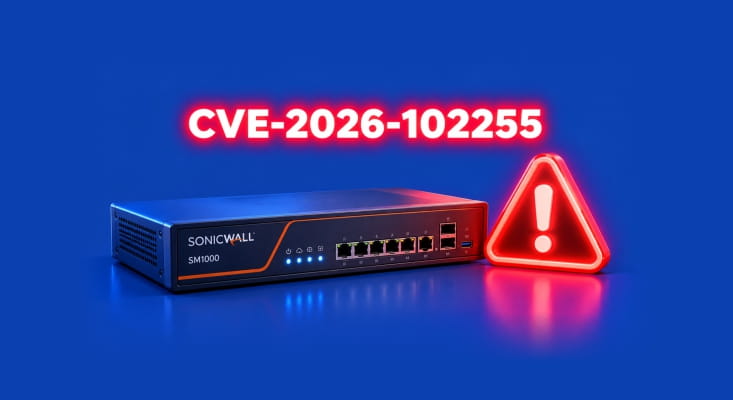
SonicWall has disclosed a critical Server-Side Request Forgery vulnerability in its SMA 1000 series.
SMA (Secure Mobile Access) 1000 is an appliance-based secure remote access platform used by organizations to give employees, contractors, partners, and other authorized users secure access to appliances and resources inside their network.
In this blog, we will break down what the Server-Side Request Forgery flaw in SonicWall SMA1000 is about, its impact on organizations, and what organizations can do to mitigate it.
About the vulnerability
|
Vendor/Component impacted |
Threat Type |
CVE identifier/ CVSS |
Affected versions |
|
SonicWall Inc./SMA (Secure Mobile Access)-1000 |
Remote Code Execution/ Stack-based Buffer Overflow |
CVE-2026-102255 / 10.0 (Critical)
|
|
Tracked as CVE-2026-102255 with a CVSS score of 10 (Critical), this flaw can allow a remote unauthenticated attacker to abuse an unintended access path and make the appliance issue requests on their behalf, reaching internal functionality.
The internal server can see the request as coming from the SMA1000 rather than from the attacker.
What an attacker can do with the vulnerability?
An attacker can exploit the vulnerability to:
- Access internal functionality of the appliance.
- Send unauthorized requests to internal services.
- Perform unauthorized operations on the affected appliance.
- Potentially increase the impact of a compromise depending on accessible internal services.
SharkStriker’s recommendations
- Identify all SonicWall SMA 1000 appliances running affected versions.
- Upgrade affected appliances to the latest security-fixed release as soon as possible.
- Restrict administrative and remote-access interfaces to trusted networks.
- Avoid exposing vulnerable SMA 1000 interfaces directly to the public internet unless required.