CVE-2026-41089: Actively exploited critical zero-click RCE flaw in Windows Netlogon
09 Jun 2026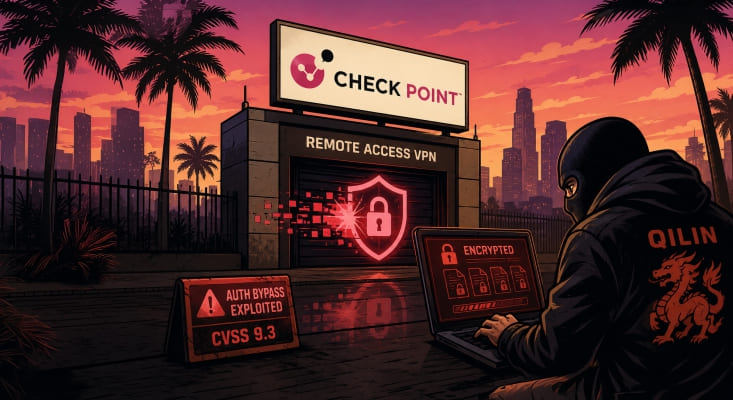
Check Point has disclosed a critical zero-day authentication bypass vulnerability, tracked as CVE-2026-50751, affecting its Remote Access and Mobile Access VPN software layers. The vulnerability stems from a severe logic flow flaw in certificate validation within legacy setups.
Through this blog, we will understand what the vulnerability is about, the threat posed by the vulnerability, and some of the security actions that organizations can take to prevent/mitigate the threats posed by the vulnerability.
About the vulnerability
|
Vendor + component affected |
CVE Identifier |
About |
Severity |
|
Check Point Software Technologies +
Remote Access VPN, Mobile Access/SSL VPN deployments, and site-to-site VPN architectures.
|
CVE-2026-50751: 9.3 (Critical)
|
The security flaw is confined specifically to environments where the deprecated IKEv1 key exchange protocol is active, legacy remote access clients are allowed, and connection baselines fail to strictly enforce machine certificate validation.
|
9.3 (Critical) |
|
CVE-2026-50752: 7.4 (High)
|
improper certificate validation in site-to-site VPN setups using IKEv1, opening the door for potential Man-in-the-Middle (MitM) interceptions.
|
7.4 (High) |
What can attackers do with the vulnerability?
A remote, unauthenticated attacker can exploit this weakness to bypass traditional password-based authentication completely. This allows them to establish an unauthorized remote access VPN connection into the target enterprise network.
By sending crafted malicious authentication requests over the network, external attackers exploit the faulty validation logic of gateways configured with legacy IKEv1 parameters. No user credentials, secondary passwords, or administrative tokens are required to establish a fully authorized network perimeter session.
Attackers, especially Qilin ransomware-as-a-service affiliates are exploiting the vulnerabilities to orchestrate massive4 corporate breaches.
By exploiting the vulnerabilities, the attackers can:
- Gain initial access to network
- Rapidly move across network
- Exfiltrate data internally using tools like Rclone
- Deploy ransomware payloads
- Intercept or modify secure site-to-site tunnel data via Man-in-the-Middle attacks (second flaw)
SharkStriker recommendations
To defend your perimeter security infrastructure and insulate your critical network assets against Qilin ransomware exploitation, SharkStriker recommends implementing the following rapid-response defenses:
- Deploy Jumbo Hotfixes Immediately: Prioritize the deployment of vendor-supplied Jumbo Hotfix updates across all vulnerable active production systems, including affected versions of R82.10, R82, R81.20, and all applicable End-of-Support (EOS) gateways or Spark Firewalls.
- Enforce Hardened Workarounds (If Patching is Delayed): Break the active exploit chain instantly by applying at least one of these high-impact configuration changes within your gateway properties:
- Upgrade Exchange Protocols: Reconfigure global Remote Access VPN settings to enforce IKEv2 only, completely disabling legacy IKEv1 negotiations.
- Mandate Machine Certificates: Change configuration baselines to make Machine Certificate Authentication strictly mandatory for every remote access tunnel.
- Drop Legacy Clients: Turn off and completely remove support for legacy Remote Access client connections.
- Activate Proactive Threat Hunting: Review and analyze firewall connection logs retrospectively dating back to May 7, 2026. Look for anomalous, rapid remote connections passing through without normal password validations, or logins originating from suspicious Virtual Private Server (VPS) infrastructure.
- Deploy Targeted Intrusion Signatures: Ensure that Check Point Intrusion Prevention System (IPS) modules are fully engaged and updated with the latest compiled signatures mapped specifically to mitigate these protocol exploits.