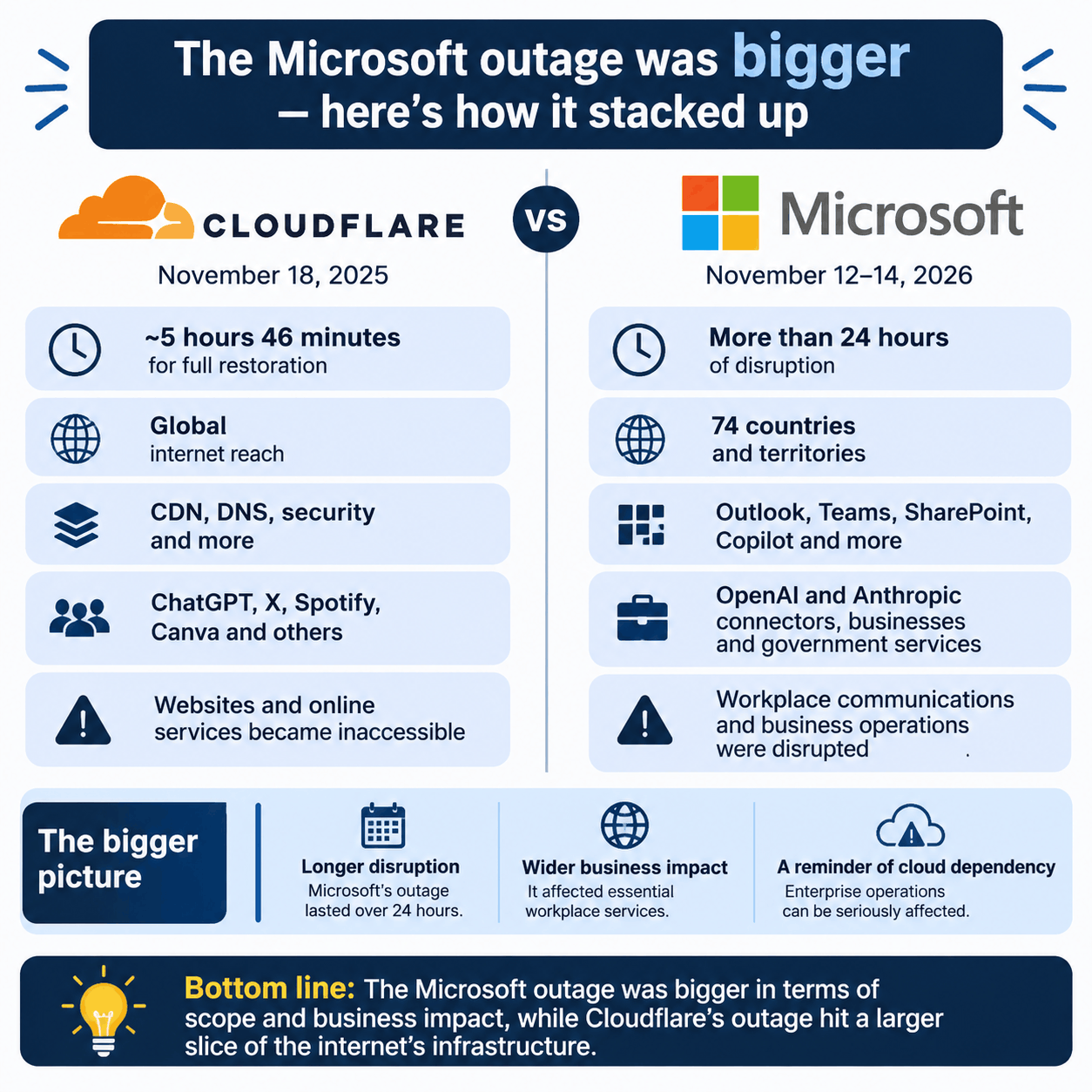
From mailbox access complaints to memes flooding social media, the Microsoft Outage was simply one of the biggest outages of 2026, following the Cloudflare major outage that happened last year. It was so big that now it has its own Wikipedia page!
Modern organizations rely on Microsoft’s cloud ecosystem for much more than email and collaboration. It also supports critical security capabilities, a range of services from endpoint protection to threat detection.
What happens when these services become unavailable?
While Microsoft didn’t report any indication of a cyber attack, the incident raises an important question: Are organizations prepared to maintain security when cloud services become unavailable?
In this edition of the Journal, we will explore the security implications of such outages and what organizations can do to make their security outage-proof.
How could an outage like Microsoft affect organizational security?
The impact of a cloud outage is not just limited to employees losing access to inboxes or collaboration tools but also security services that depend on the same cloud ecosystem.
Disruptions can affect an organization’s ability to manage access, monitor threats, and respond to incidents.
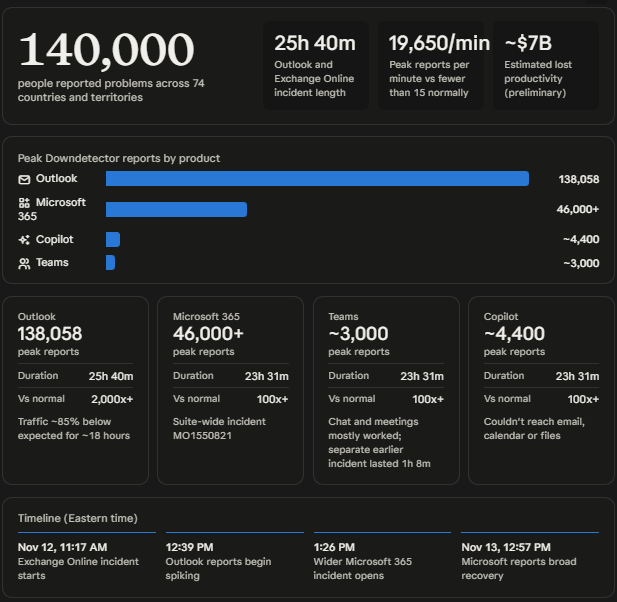
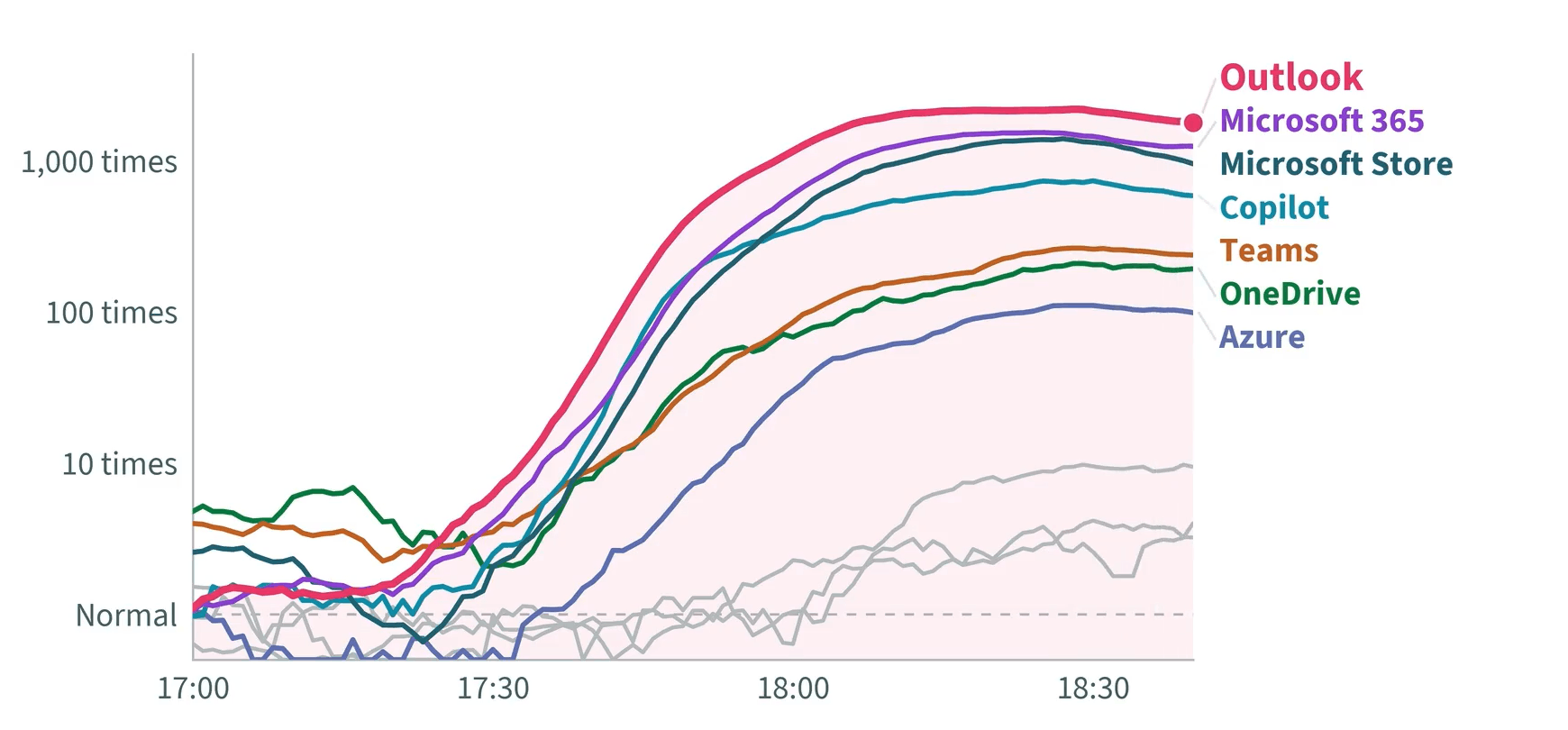
It can impact security in five ways:
Disruptions to endpoint management
Security implications – Delayed security configuration updates and enforcement of endpoint controls.
Example – Microsoft Intune experienced intermittent disruptions affecting device enrollment, check-ins, and compliance policies.
Disruptions to security monitoring
Security implications – Reduced visibility into security alerts and delays in threat investigation.
Example – Microsoft Defender XDR access issues affecting portal pages and solution tabs.
Disruptions to email security
Security implications – Reduced access to email threat investigation, URL verification, and remediation capabilities.
Example – Certain Defender for Office 365 features were affected, including SafeLinks, Safe Attachments, and access to Threat Explorer.
Delayed Incident response and communication
Security implications – Delays in incident reporting, response coordination, and communication between security teams.
Example – Outlook and Exchange Online experienced email access and delivery issues.
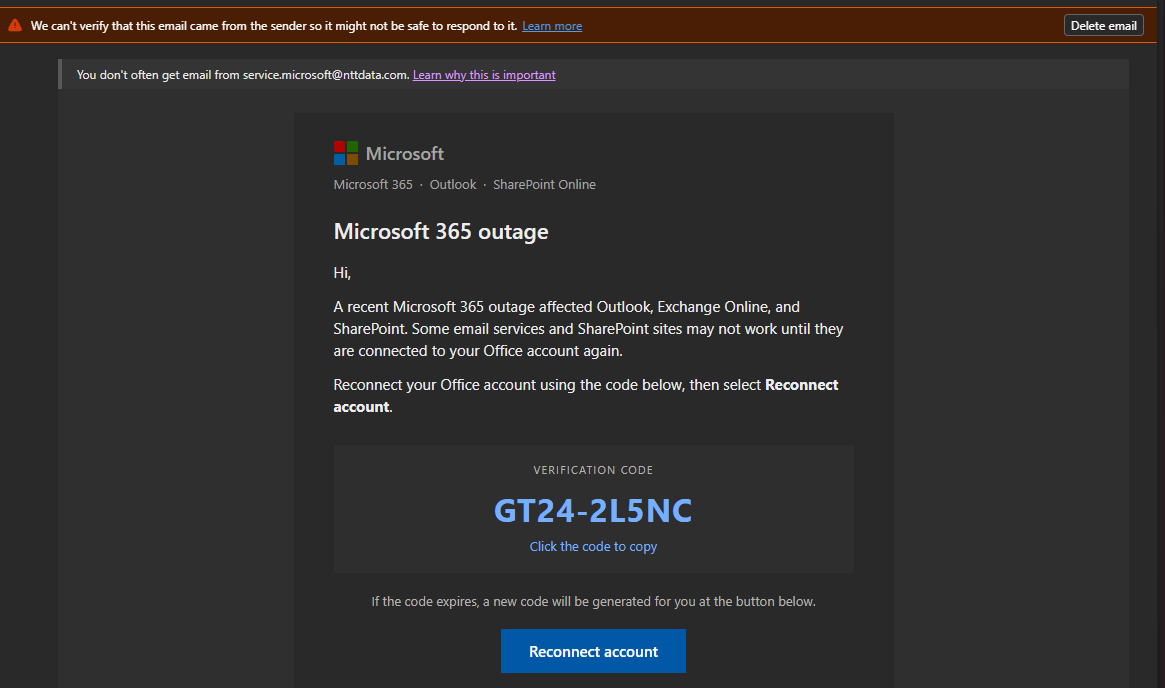
Exposure of employees to outage themed phishing campaigns
Security implications – employees are more susceptible to attackers leveraging the outage to send them phishing emails that impersonate cloud service providers offering links to reconnect.
Example – SharkStriker observed a massive Microsoft outage themed phishing campaign asking users to enter a code and reconnect.
5 lessons from the Microsoft Outage
1. Cloud concentration creates single points of failure
Relying on a single cloud ecosystem for multiple business and security functions can backfire during an outage. A single service disruption can affect multiple interconnected operations.
2. Security visibility cannot depend on cloud availability
When platforms become inaccessible, teams may lose access to critical alerts, telemetry, and investigation capabilities. Security visibility should remain a priority even when cloud services are unavailable.
3. Incident response must survive service outages
Incident reporting and response coordination can face delays and become complicated when there is an outage affecting email, collaboration, and security platforms. Assuming that usual communication and response channels will always be available can backfire during outages. Therefore, organizations should have reliable contingencies in place that can work in such situations.
4. Security tools need operational resilience
Cloud service failures do not necessarily stop endpoint protection or other security controls but can limit centralized management and other capabilities like monitoring and response. Therefore, organizations must ensure that security tools are not just deployed but also operational and manageable even when cloud services go down.
5. Cloud resilience is not separate from cybersecurity
A cloud outage can affect more than just business productivity but also make it challenging for security teams to protect the organization. Therefore, organizations must account for impact of cloud outages on the continuity of both business and cybersecurity operations while planning for such situations.
5 tips to make security outage-proof
1. Map your cloud dependencies – Identify which security tools rely on cloud services and which of their capabilities become unavailable during an outage.
2. Establish backup communication channels – In case of unavailability of email/collaboration channels during an outage.
3. Maintain endpoint protection – Ensure that endpoint security controls operate locally even when centralized management controls are inaccessible.
4. Preserve security logs – Maintain independent access to critical security logs and alerts to support threat investigation during an outage.
5. Test outage response plans – Plan and conduct exercises to test preparedness, assessing things like alternate communi
How SharkStriker helps build outage-proof security?
Continuous, vendor-independent monitoring
SharkStriker’s agents collect telemetry from endpoints and the network directly, so visibility doesn’t disappear when a Microsoft portal goes down.
Automated detection and blocking
Suspicious activity (anomalous processes, lateral movement) can be flagged and acted on by our agents without waiting on Microsoft’s cloud services to respond.
A second layer, not a replacement
SharkStriker STRIEGO is designed to sit alongside Microsoft 365 and Defender, adding redundancy rather than requiring organizations to rip out their existing stack.
24/7 SOC
during an incident like this outage, SharkStriker’s security operations team can continue investigating and responding to alerts through its security platform, STRIEGO, while native Microsoft consoles are unavailable.