Active Directory: How are attackers compromising enterprise identity?
16 Sep 2026
The CISA recently issued guidance on detecting and mitigating threats involving Active Directory environments.
The guidance is to secure organizations from threats posed by compromised Active Directory environments, such as attackers abusing privileged accounts, stealing credentials, moving laterally across the environment, and engaging in unauthorized administrative activity.
Through this blog, we will understand what the threat is about, how it impacts organizations, and what they can do to defend against it.
About the vulnerabilities
|
Threat name |
Type |
Affected Products |
Severity |
Primary target |
|
Active Directory Compromise
|
|
|
High / Critical Enterprise Identity Security Risk
|
|
How it happens?
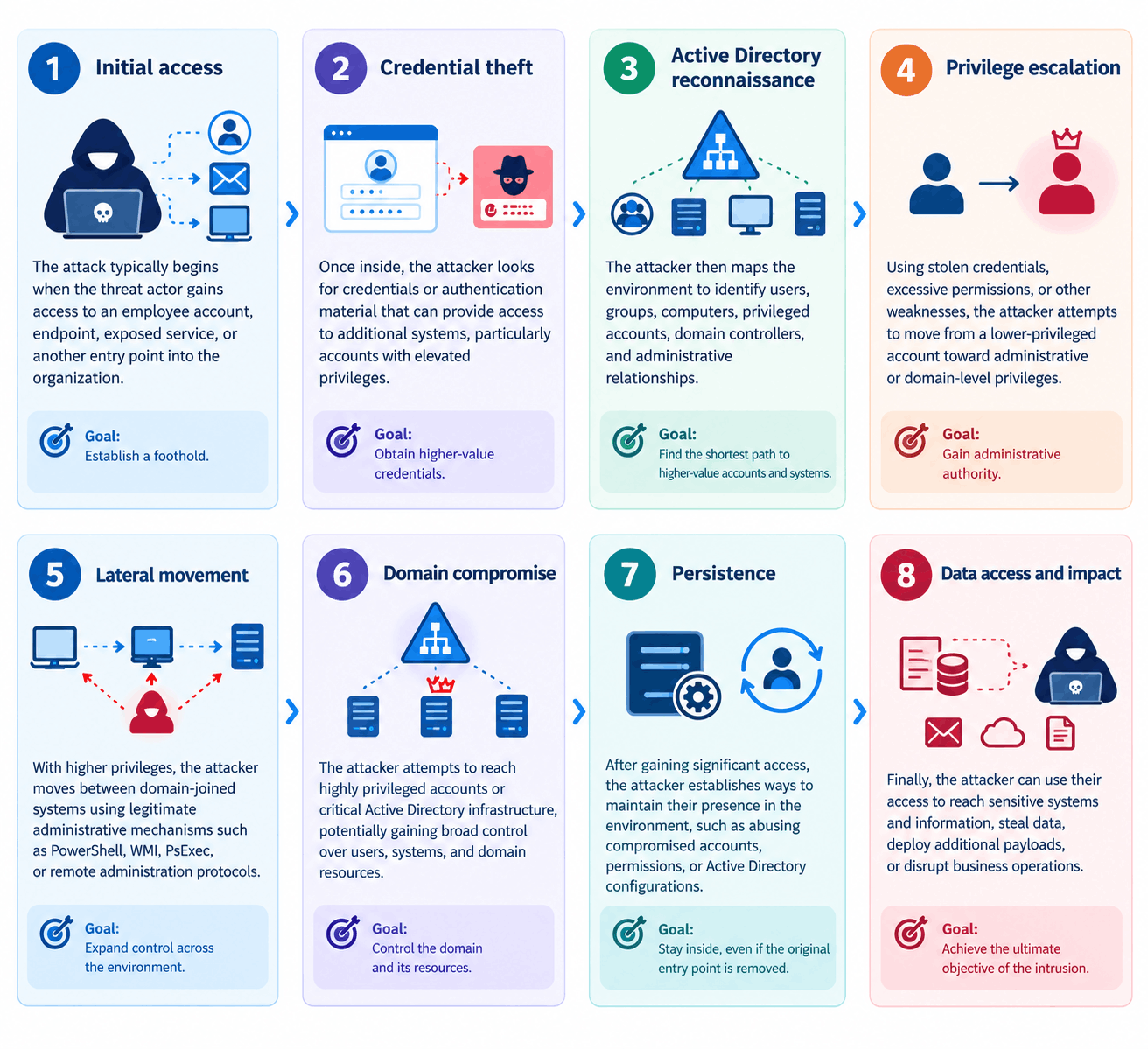
The threat impacts organizations in multiple ways, including attackers being able to:
- Compromise privileged/domain administrative accounts.
- Steal or reuse credentials.
- Move laterally across domain-joined systems.
- Abuse legit admin tools such as PowerShells, WMI , and PsExec.
- Establish persistence through compromised accounts and Active Directory configurations.
- Gain unauthorized access to sensitive systems and data.
- Stay undetected access to an enterprise environment.
Official security guidance
Organizations should follow CISA’s guidance for detecting and mitigating Active Directory compromises and apply Microsoft security hardening recommendations.
Key measures include:
- Implement least privilege for privileged accounts.
- Regularly review Active Directory permissions and privileged groups.
- Regularly rotate the KRBTGT account password, particularly following a suspected compromise.
- Maintain appropriate logging and monitoring across critical Active Directory systems.
SharkStriker’s recommendations
- Review all privileged and administrative accounts for unnecessary permissions.
- Enable and monitor authentication, account-management, and privileged-activity logs.
- Review Active Directory groups and identify excessive privileges.
- Ensure domain controllers and Windows systems are regularly patched.
- Implement MFA for privileged access where supported.
- Maintain secure and tested backups of critical Active Directory infrastructure.
SharkStriker’s actions
- Shared the CISA Active Directory compromise detection and mitigation guidance with the relevant security/IT team.
- Recommended reviewing Active Directory privileged accounts and authentication activity.
- Recommended monitoring for suspicious administrative-tool usage and lateral-movement activity.
- Recommended validating existing logging and detection coverage for Active Directory-related events.
- Recommended remediation and escalation where indicators of compromise are identified.